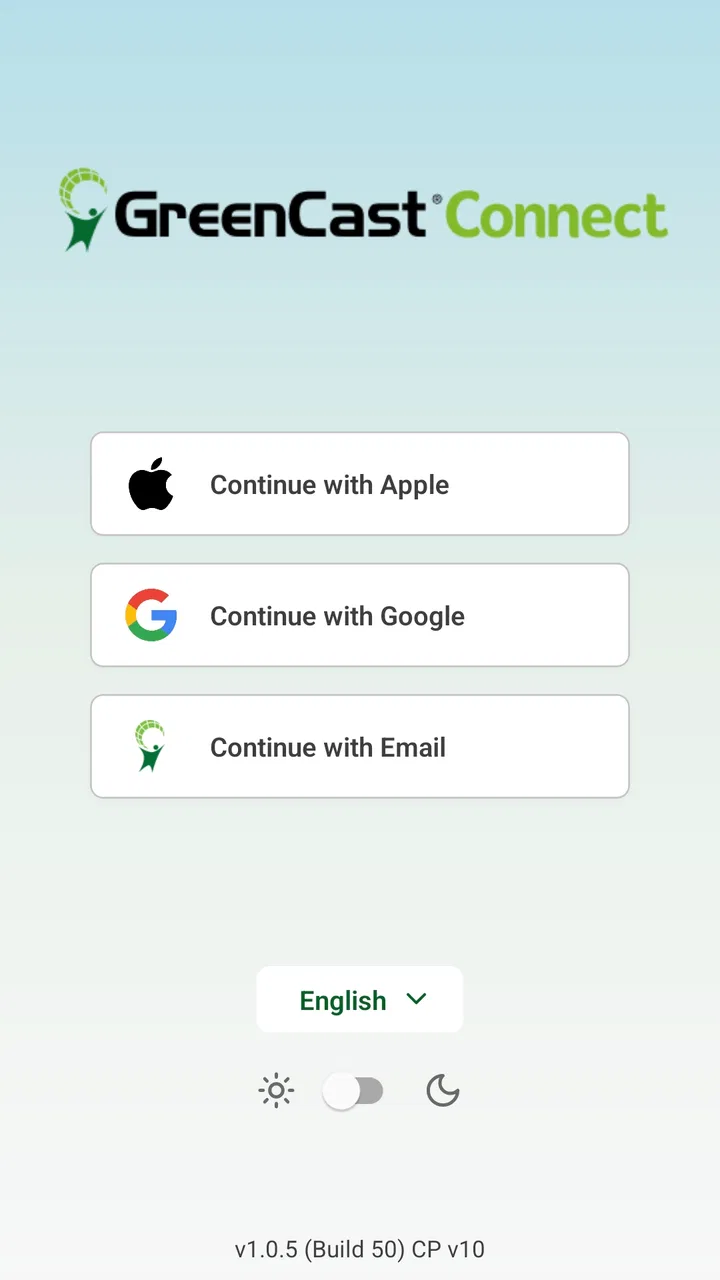
GreenCast Connect by Syngenta
- 4.0
- Rating
- 10.00K
- Installs
- Free
- Price

 Analysis by App-foxy
GreenCast Connect is a weather app from Spiio aimed at people who need more than a quick glance at today’s temperature. Its focus is digital turf agronomy, so the useful question is not simply whether it will rain, but how weather information can support decisions around maintained grass. I approached it as someone trying to turn changing outdoor conditions into a practical routine, and my impression is that it makes the most sense when weather is part of a larger turf-care workflow.
The app is free, rated for Everyone, and works on Android devices running version 7.0 or later. It was released on January 15, 2025, and the current version is 1.4.1. GreenCast Connect has passed 10K installs, with an average rating of 3.1 from 17 ratings and four written reviews. That modest reception is worth keeping in mind: this is a focused tool with a specific audience, not a universally polished weather replacement for every phone.
From a weather question to a turf-care decision
I find the most useful way to judge a turf-focused weather app is to start with the decision it needs to support, not the forecast screen itself. A shared-device situation makes that especially clear: one person may check conditions, while someone else carries out the work. From there, I’d look at how each person’s role and access fit into a dependable routine.
You May Also Like

 AccuWeather: Weather Radar
AccuWeather Review: A Quick, Clear Forecast for Everyday Decisions
For everyday plans, the best forecast is the one you can understand quickly. AccuWeather makes rain timing, radar, and local conditions easy to act on, with a few trade-offs.

 Hill Climb Racing
Why Hill Climb Racing Still Turns Crashes Into One More Run
A tiny car, a bumpy hill and one more upgrade: Hill Climb Racing keeps resurfacing because its simple chaos makes every near-miss feel personal.

 AliExpress - Shopping App
AliExpress Makes Global Shopping Feel Personal, but Shoppers Bear the Risk
AliExpress turns a global marketplace into a pocket-sized discovery engine. Its reach is useful, its shopping loop compelling, and its trade-offs easy to miss.

 Lords Mobile: Kingdom Wars
Lords Mobile Is a Kingdom-Building Routine, Not a Quick Match
A case-by-case verdict on the building, battles, device demands, and social commitments that make Lords Mobile rewarding for some players and exhausting for others.

 PDF Scanner app - TapScanner
TapScanner Makes Paperwork Easier to Capture, Check, and Share
TapScanner makes scanning with a phone feel less like a rescue operation and more like a dependable step in getting work done. Its capture tools are useful, though not flawless.

 Block Blast!
 Shows How Much a Puzzle Game Can Leave Out
A quiet grid game shows why puzzle players increasingly value instant clarity, repeatable skill and low-pressure play—and where the genre still needs to catch up.
More From Our News Desk
View All News


Starting with the real problem
My starting condition with an app like this would be familiar to anyone responsible for a sports field, golf area, landscaped grounds, or another carefully maintained turf surface: the forecast looks changeable, and a decision has to be made before the weather becomes obvious. Should the team carry out planned work now? Is the surface likely to be suitable later? Would a weather-related task be better postponed?
Ordinary weather apps are good at answering broad personal questions. They tell me whether I should take an umbrella, how warm the afternoon may feel, or whether a storm is approaching. That is useful, but turf management needs a more operational mindset. A manager is often connecting weather conditions with scheduling, surface care, staff availability, and the consequences of getting the timing wrong.
GreenCast Connect’s appeal is that it places turf agronomy at the center rather than treating it as an afterthought. I would not open it expecting a general-purpose weather dashboard with every familiar consumer feature. I would open it when the weather forecast needs to become part of a work decision.
Building a repeatable check
The most practical way to use it is as a repeatable checkpoint rather than a one-time forecast lookup. I would begin before the working day, review the conditions relevant to the turf area, and then compare that information with the planned jobs. The important habit is to avoid treating a single forecast view as a final answer. Weather changes, and a responsible workflow needs a later review before people, equipment, or materials are committed.
That creates a useful separation between information and action. First I inspect what the app is showing. Then I ask what that means for the surface and the schedule. Finally I communicate a decision to whoever is carrying out the work. This sounds simple, but it is one of the app’s more important strengths: it encourages me to think in terms of turf outcomes instead of isolated weather icons.
A small but valuable tip is to record the decision in the same place where the team normally plans work. The weather app should inform the handoff, not become the only place where the plan exists. If a morning check changes the schedule, the reason should travel with the new plan. That reduces the risk of one person seeing a forecast while the rest of the team continues with yesterday’s assumptions.
Moving through the workflow
In everyday use, I would treat the app as the first step in a chain. I inspect the current weather picture, relate it to the turf area under consideration, and identify whether the conditions support the intended task. The next step is not to blindly follow the app, but to combine its information with local observation. A forecast cannot replace walking the site, checking the surface, or understanding what happened there recently.
This is where GreenCast Connect feels more specialized than a typical phone weather app. Its value is strongest for users who already think about turf as a managed system. The app can help organize the weather side of that thinking, but it does not remove the need for experience. If the ground behaves differently from the wider weather pattern, the physical site should win the argument.
For a grounds team, I would use a two-pass routine. The first pass would happen while planning the day, when there is still time to adjust staffing and equipment. The second would happen close to the task itself, when the decision can be checked against the latest conditions. This is more reliable than checking once at the start of the week and assuming the plan will remain valid.
For an individual managing a smaller area, the same approach can be simplified. I might check the app before arranging work, decide whether the timing still looks sensible, and then verify the surface in person. The benefit is not that the app makes the decision automatically; the benefit is that it gives the decision a more deliberate starting point.
Where handoffs matter most
The handoff from the person checking the weather to the person doing the work is where many digital workflows become fragile. A supervisor may review conditions early, while a contractor, colleague, or volunteer receives only a short message such as “go ahead” or “wait.” That message can lose the reasoning behind it.
I would therefore pass along three things: the planned task, the timing, and the weather-related reason for the decision. If the plan changes, I would make the change explicit rather than assuming everyone will reopen the app. This is especially important when several people work across different areas, because a general instruction may not fit every surface equally well.
GreenCast Connect is best viewed as a shared reference point in that process, not as a substitute for communication. A person who never opens the app can still benefit from it if the person coordinating the work turns the information into a clear instruction. That makes the app useful even in teams where not every worker wants another app on a phone.
There is also a practical trade-off here. A small operation may find the workflow easy because one person handles planning and execution. A larger operation gains more from a structured weather check, but it also has more opportunities for information to be lost between roles. The app helps with the first part of the chain; the quality of the handoff still depends on the team.
A realistic day with the app
Imagine a grounds coordinator preparing a morning schedule for a maintained playing surface. The team has several jobs planned, and the weather could affect when they should be done. I would open GreenCast Connect before assigning the work, review the conditions, and decide whether the original order still makes sense. If the weather picture makes the timing less attractive, I would move the weather-sensitive task and tell the team why.
Before the work begins, I would check again rather than relying on the earlier view. Then I would walk the area and compare the digital information with what is actually happening on the ground. If the surface and the forecast point in different directions, I would pause and use judgement instead of forcing the schedule simply because the app was consulted.
Afterward, I would keep a short note about what was decided and whether the conditions matched expectations. This is one of the more advanced ways to get value from a simple weather workflow. Over time, those notes can help a manager understand how forecast information translates into the behavior of a particular site, even though the app itself is not a replacement for local records or professional agronomic judgement.
That process also shows who may not need the app. If I only want a casual forecast for commuting, travel, or weekend plans, a standard weather application will probably be quicker and more familiar. GreenCast Connect becomes worthwhile when the weather check is connected to turf responsibility and a real operational consequence.
What the result looks like
The result I would expect is not a dramatic single-screen answer. It is a better-timed decision: carry on, delay, reorder, or inspect more carefully before proceeding. That may sound less exciting than an app that promises to automate everything, but it is more realistic for turf work. Conditions on a managed surface are influenced by the site, the schedule, and the people acting on the information.
In that sense, the app’s strongest outcome is improved discipline. It encourages me to make weather part of the planning conversation before work starts. It can also make a decision easier to explain to others, because the team is responding to a considered weather review rather than a vague feeling that the conditions might change.
For a small grounds operation, that can mean avoiding an unnecessary trip or rearranging work before staff and equipment are committed. For a larger site, it can support a common starting point for daily planning. The benefit grows when the organization already has clear responsibilities and a habit of reviewing conditions at defined points in the day.
I would be careful not to overstate the result. The app does not turn uncertain weather into certainty, and it does not make local observation irrelevant. Its contribution is to make the weather part of the workflow more focused. That is a meaningful improvement for the right user, but it is not the same as a complete turf-management system.
Where the workflow breaks
The first friction point is audience. GreenCast Connect is specialized, and that specialization may feel unnecessary if I am looking for a conventional weather app. A general alternative may offer a faster glance at familiar information for everyday planning. Choosing this app makes sense only if the turf-oriented context matches the reason I am checking the weather.
The second weakness is the dependence on interpretation. A forecast can inform a decision, but it cannot understand every local detail that matters to a surface. If a user expects the app to tell them exactly what to do without checking the site or considering the wider maintenance plan, disappointment is likely. The app works better as a decision aid than as an automatic manager.
The third issue is coordination. If the person making the plan does not communicate the change clearly, the value of the weather review can disappear before the work begins. This is not a flaw unique to one app, but it matters here because the product’s usefulness depends heavily on what happens after the forecast is read.
The relatively small number of ratings and the 3.1 average also suggest that I should approach it with measured expectations. Those figures do not tell me exactly why individual users felt satisfied or frustrated, but they do indicate that the experience has not yet established broad consensus. I would test it with one recurring workflow before making it central to a larger operation.
Another sensible precaution is to keep a backup habit. If the app is unavailable at the moment a decision is needed, the team should still know how to check conditions and communicate a change. A weather-dependent operation should never have a single point of failure, especially when the work involves people waiting on a go-ahead.
Who should use it, and who should skip it
I would recommend GreenCast Connect to turf managers, grounds coordinators, sports-field teams, golf-related staff, and other users who regularly connect weather conditions with the care and scheduling of maintained grass. It is also a good candidate for someone who wants a more deliberate agronomy-oriented routine instead of a casual forecast glance.
I would skip it if my only need were a simple daily forecast. A mainstream weather app may be the better choice for travel, commuting, family planning, or checking temperature and rain at a glance. I would also avoid making this my only tool if I need a full operational platform covering every part of turf maintenance, because the app’s role is centered on the weather side of the workflow.
For teams, I would start with one clearly defined use case: the morning planning check for a particular area. Give one person responsibility for reviewing it, require a second review before the work begins, and make the resulting instruction visible to the team. That approach tests whether the app improves decisions without forcing everyone to change their entire routine at once.
My final take on the turf-focused approach
GreenCast Connect by Spiio is a focused weather app with a clear purpose. I like it most when I imagine it sitting between a forecast and a real maintenance decision, helping a responsible person organize the weather part of the day before handing instructions to others. Its strength is not flashy general-purpose convenience; it is the attempt to make weather more relevant to managed turf.
The free price lowers the barrier to trying it, and the Everyone rating makes it approachable from an audience standpoint. The current version, 1.4.1, is the one I would evaluate when deciding whether it fits a team’s routine. Still, the modest rating average means I would trial it rather than assume it will suit every organization immediately.
My recommendation is conditional but positive: use it if your weather questions are really turf-management questions. Build it into a check-and-handoff routine, compare its information with the site itself, and keep a clear backup process. If you only want a familiar everyday forecast, choose a general weather alternative. For the right audience, though, this app can turn an otherwise vague weather check into a more thoughtful operational decision.
FAQs for GreenCast Connect by Syngenta
01What is GreenCast Connect by Syngenta used for?
GreenCast Connect by Syngenta is designed to assist turf management professionals by providing real-time data and insights. With features like weather tracking, pest alerts, and customizable notifications, it helps users optimize their maintenance strategies, ensuring healthier and more resilient turf. This app is especially useful for golf course managers and landscape professionals.
02Is GreenCast Connect available for both Android and iOS devices?
Yes, GreenCast Connect by Syngenta is available for download on both Android and iOS platforms. Users can find the app on the Google Play Store for Android devices and the Apple App Store for iOS devices, making it accessible to a wide range of users looking to enhance their turf management practices.
03Does GreenCast Connect require a subscription or is it free to use?
GreenCast Connect offers a range of features for free, but some advanced functionalities may require a subscription. Users can start with the basic version to explore its capabilities and decide if the premium features align with their professional needs. Subscription details and pricing can be found within the app.
04How does GreenCast Connect handle data privacy and security?
GreenCast Connect by Syngenta prioritizes user data privacy and security. The app employs robust encryption methods to protect personal and operational data. Users can review the app’s privacy policy within the application to understand how their information is collected, used, and safeguarded, ensuring compliance with data protection regulations.
05What kind of support is available for GreenCast Connect users?
GreenCast Connect provides comprehensive support for its users. This includes a detailed FAQ section, user guides, and video tutorials within the app. Additionally, users can contact customer support via email or phone for personalized assistance. The support team is dedicated to helping users make the most of the app's features.
Pros
- User-friendly interface for seamless navigation.
- Real-time updates on crop health and weather.
- Customizable alerts for pest and disease risks.
- Comprehensive database of farming resources.
- Offline access to key functionalities.
Cons
- Limited support for non-English languages.
- Requires consistent internet for full features.
- High battery consumption during prolonged use.
- In-app purchases necessary for premium content.
- Initial setup can be time-consuming.

GreenCast Connect by Syngenta
Gallery